———————————————————————————————————————————————
Latiou, The Slippery Tongue: From Snack to Scare, From Canteen to Crisis
A Marginal Note on Taste, Hope, and Caution in Our Schools
ON what was supposed to be a cheerful Thursday morning filled with colored pencils and art class, eight students of Sekayu Public Elementary School No. 3 ended up lying in hospital beds. Instead of jostling for seats or flying kites during recess, they were battling nausea, vomiting, and dizziness—allegedly caused by food poisoning. The culprit? A snack called “Latiou”—which, let’s be honest, sounds more like a soap opera character than something meant for a child’s lunchbox.
Let’s begin here: the school canteen. Once considered a “mini heaven” after math class, it used to be the place where kids scrambled to buy cilok, rainbow cakes, and icy pops. But now, we must ask: “Are the colors of the canteen still as bright as a rainbow—or is there something dark lurking in the wrappers?”
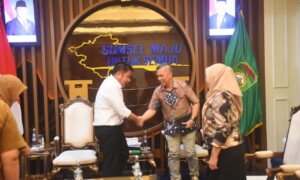
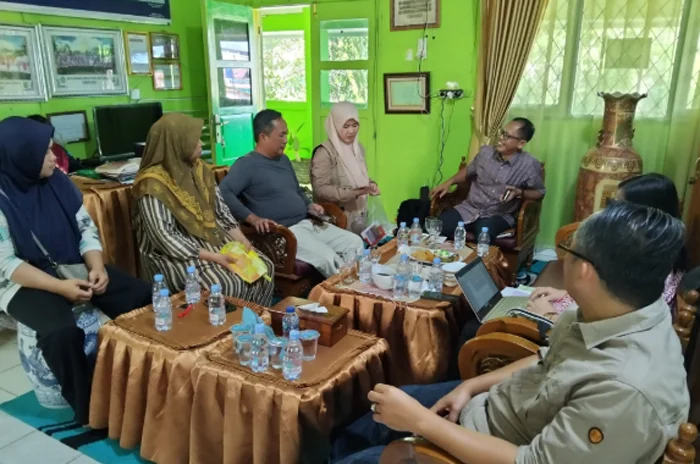
A joint team—from Muba District Health Office, Palembang’s Food and Drug Authority (BBPOM), and the local Education Office—swooped in. They didn’t just inspect stalls but traced ingredients, labels, and the small-scale business networks wrapping these snacks. Even the distributor was scrutinized. Turns out, what enters a child’s mouth can have a long legal tail.
As the saying goes, “Even clean water can be toxic if the container leaks.” A cute wrapper and savory taste are no longer enough—school snacks must be tested for how much they care about children.
School isn’t just a place to learn reading and arithmetic. It’s where children start learning about life—including how to take care of their bodies. But when snacks are no longer wisely filtered, the education we build so hard can crumble from a single bite.
This isn’t just about poisoning. It’s about weak oversight. It’s about snack vendors’ lack of nutritional literacy. It’s about a national indifference that treats food labels as decoration, not as warning signs.
“What’s the point of the Freedom Curriculum when the canteen is still colonized by unverified snacks?”
—quipped a teacher who escorted her students to the ER.
Muba—and every district, really—must start building a Truly Healthy Canteen, not just hang a decorative board with that name. We need real SOPs about product types, lab certification, and regular training for canteen vendors. Local governments, school staff, and parents must sit together—not just to talk about national exams and school zoning, but also about what’s inside the lunchboxes.
If not, don’t be surprised when a new snack comes along called “Kribik Kribik Keracunan”, salmon-nuclear-flavored edition. This isn’t exaggeration—it’s a red flag.
Aquirina Leonora from the BBPOM Palembang emphasized the importance of thorough product verification. A product similar to “Latiou” had previously been withdrawn—but now it’s back, in a new costume, same danger.
Like an ex who shows up in different clothes but still breaks your heart.
Comprehensive testing is now underway. Samples are being analyzed. But while we wait, let’s draw a lesson now:
“Don’t wait for a warning label to admit something is dangerous.”
We, a nation obsessed with spicy food, often forget that a child’s tongue is not the same as an adult’s fireproof palate. Don’t blame the kids for loving to snack—blame us for not giving them safe alternatives.
In a child’s world, a snack is a form of affection.
So don’t let them absorb that love from artificial dyes and questionable preservatives.
“Our children are the seeds of our future. Let’s not raise them in soil laced with artificial flavors and danger.”
—Dr. Azmi Dariusmansyah, Head of Muba Health Office
Imagine if every school had a Healthy Snack Ambassador program—where children become change agents, monitoring each other’s snacks, even creating their own healthy, local treats like spinach chips, pumpkin pudding, or temulawak ice pops.
Seriously—nutrition and creativity can go hand in hand.
Then Latiou would just be a spicy footnote in snack history—not a recurring character during every recess.
From this incident, we learn that snack time is no trivial matter. Behind every bag of treats lies a supply chain, regulations, and a form of education.
Let’s protect our children’s mouths from unregulated, unlabeled invaders.
Because a great nation doesn’t just honor its heroes—it also protects the stomachs of its children from what they should never consume.
Today it’s Latiou, tomorrow it could be something else. But let’s hope there will be no more stories of elementary students collapsing—not from drowsiness, but from food poisoning.
The school canteen must return to being a safe haven—not a roulette of reckless flavors.
And hopefully, after this, kids can return to learning in peace—without having to guess,
“Will today bring flavor that bites, or a bite that brings the pain?”.[***]