Tracing, Inclusion, and Sustainability in Indonesia’s Leading Rubber Jurisdiction
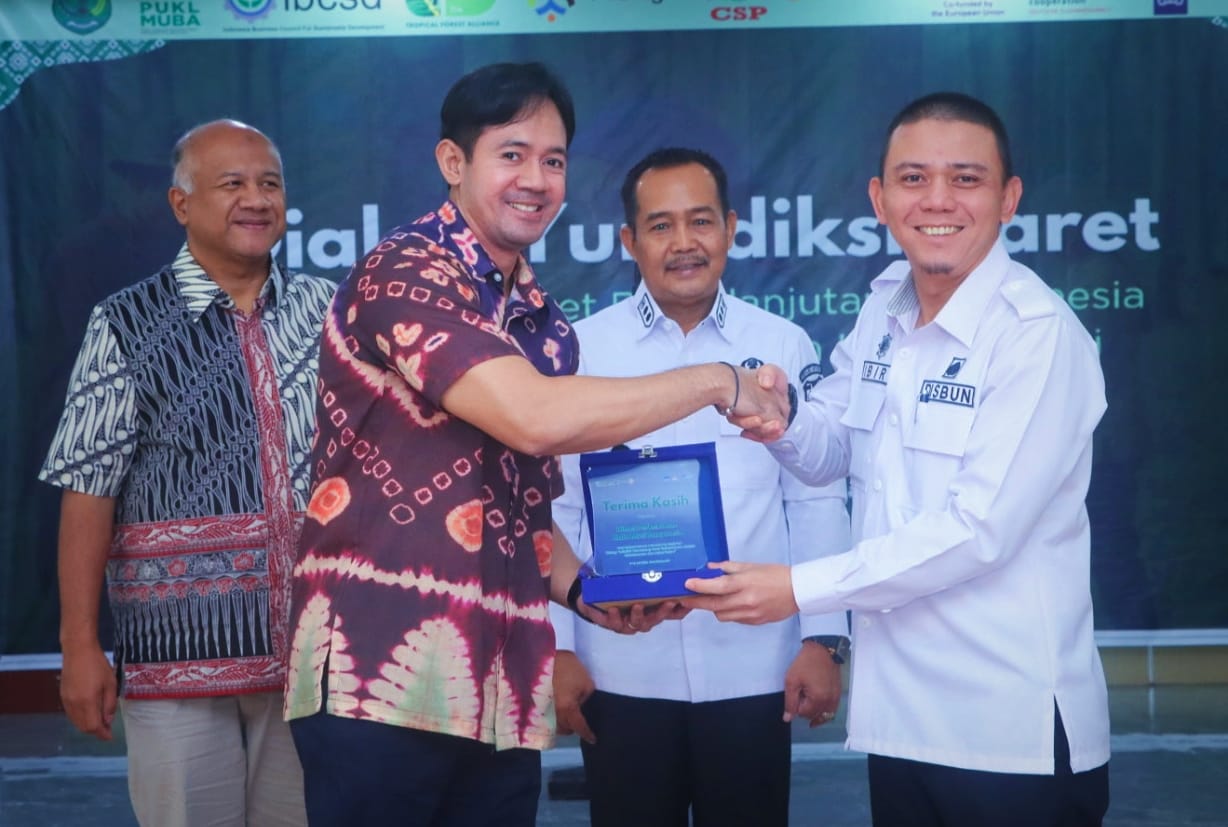
SEKAYU, INDONESIA, – IN the midst of growing global pressure to produce deforestation-free, traceable, and farmer-friendly commodities, Indonesia’s Musi Banyuasin Regency (Muba) is stepping up. On July 9, 2025, the region hosted the Rubber Jurisdiction Dialogue under the theme “Advancing Sustainable Rubber in Indonesia through Traceability and Farmer Inclusion”.
Organized by PISAgro (Partnership for Indonesia Sustainable Agriculture) in collaboration with the Muba Plantation Agency, the event gathered key stakeholders across the rubber value chain from government, corporations, smallholders, to global partners with a common goal building a sustainable, inclusive, and globally-accepted rubber supply chain.
Muba’s Vice Regent, Kyai Rohman, opened the event with a firm reminder local rubber farmers still struggle with low prices and limited access to premium markets. “Let this dialogue go beyond discussions we want real, long-term solutions that reach the ground,” he stated.
The heart of the issue lies in traceability and inclusion key words that dominate today’s agricultural trade discussions, particularly in light of the European Union Deforestation Regulation (EUDR). These policies require that exported commodities such as rubber be fully traceable and proven not to contribute to deforestation.
One of the key initiatives discussed was the STDB (Cultivation Registration Letter) a document proving that farmers’ rubber plantations are free from deforestation. It may sound like a simple piece of paper, but it’s the passport to global markets.
According to Ahkmad Toyibir, Head of Muba Plantation Agency, this administrative step is crucial. “We must ensure that our rubber can stand up to international scrutiny. Traceability is no longer optional it is the minimum standard,” he explained.
Muba, through multi-stakeholder collaboration, aims to accelerate STDB issuance for thousands of smallholder rubber farmers in the district.
PISAgro Executive Director, Insan Safaat, emphasized that Muba is not just a rubber-producing region it is evolving into a jurisdictional model for sustainability, inclusion, and innovation.
“We believe in collective action. Governments, companies, NGOs, and farmers must co-create solutions,” said Agung Nugroho, Lead of PISAgro’s Rubber Working Group.
This dialogue, followed by field visits to local plantations, aims to identify risks, barriers, and opportunities directly from farmers. The process ensures that any policy or support is rooted in real needs, not just boardroom blueprints.
Rubber is no longer just about tires and shoes. It’s a gateway to broader issues: climate resilience, rural livelihoods, and global trade ethics. With initiatives like this, Muba is turning its rubber sector into a symbol of responsible production, setting an example not only for Indonesia, but also for other producing countries.
As countries like Thailand lead in global rubber exports with traceability systems, and provinces like Jambi make strides in sustainability certification, Muba’s proactive approach is worth watching.
From tapping latex to tapping into global markets, Muba is proving that even a small district can lead in global conversations — as long as there is political will, farmer inclusion, and genuine collaboration.
This is more than just rubber. It’s about equity, ecology, and economic empowerment. As the old local saying goes “When the tree is well-rooted, the sap will flow strong -and the future will grow from there”[***]